Notes from the Silicon Age is an interactive essay about the meaning(s) of nature in the XXI century.
The COVID-19 pandemic brought an unprecedented rise in houseplants sales. But, what do we actually know about the invisible histories of these exotic companions?
April of this year will mark my 7-month anniversary as a successful plant parent. It's the third time I try to care for plants at home and it seems I've finally found the perfect companions for my north facing window and my forgetful tendencies.
A ginny peperomia (peperomia clusiifolia), a prayer plant (maranta leuconera), a ficus and a golden pothos (epipremnum aureum) seem to have broken the spell.
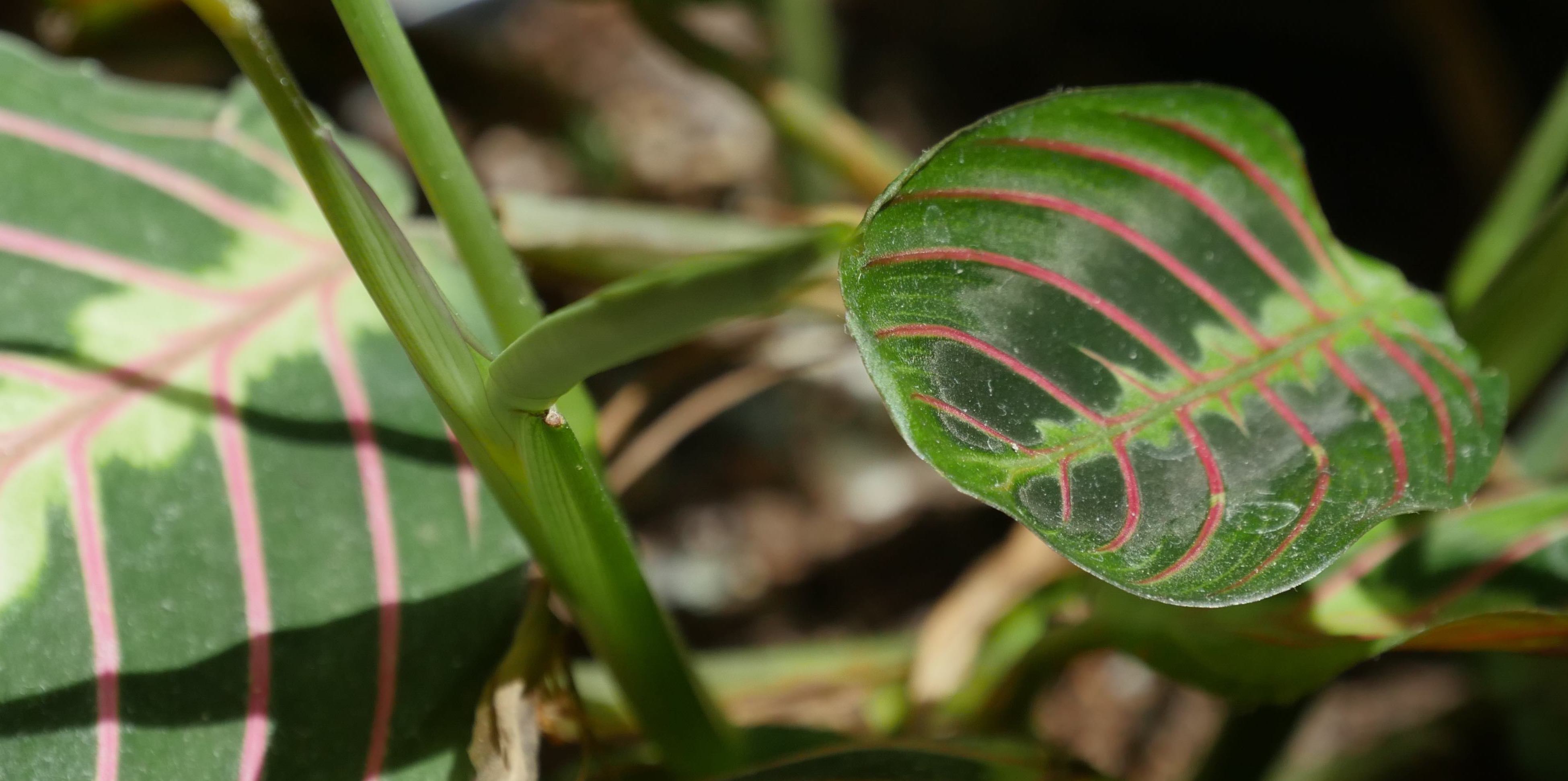
As of late, the prayer plant has become my favorite. It's the most active of them: quickly aborbing water from its bottom, growing new tiny leaves and unfurling them, following the light as it folds and unfolds its leaves thoughout the day.
I like to see it thrive, and see myself as a companion in the plant’s journey.
Having these nonhuman partners living in my room, and caring for them, has often provided a sense of purpose in what have been some isolating and rather dark months, and I am not alone on this: caring for houseplants and gardening at home has become an extremely popular activity in the last years in the United States.
My prayer plant (maranta leuconera), taking advantage of a sunny afternoon last winter. (Photo: Noel Castro Fernández)
A revolution in the garden
according to the National Gardening Association’s annual survey,[1] the horticulture industry grew by 50 % between 2016 and 2019 and it welcomed a total of 18.6 million new gardeners in 2020. Most of them are planning to increase or maintain the activity, according to the report.
In terms of sales, the wholesale value of foliage houseplants grew by 23% between 2019 and 2020 after several years of decrease, according to the U.S. Department of Agriculture 2020 Floriculture Crops Summary.[2]
The number of floriculture producers in the U.S. also grew by 14% and personal consumer expenses in flowers, seed and potted plants increased by 17 % between October of 2020 and 2021, according to the Bureau of Economic Analysis.
Click on the tabs below to see more historical data about different product sales.
Click on the tabs below to see more historical data about different product sales.
Wholesale value of foliage plant sales in the U.S. between 2010 and 2020
Value of sales in building material, gardening equipment and supplies for the U.S. between 2011 and 2021
Personal consumer expenditure in flowers, seeds and potted plants in the U.S. for the first quartile of the year between 2011 - 2021
The pandemic was a key driver in this jump, both for houseplants and the horticulture industry in general -which had already been experiencing a steady rise since 2010-.
It was "both a physical and emotional event," explains Melinda Knuth, a researcher at the Horticultural Science department at North Carolina State University.
On the one hand, lockdown orders pushed people to find ways to connect with the outdoors at home and beautify their indoor spaces. On the other, the pandemic also brought increased general attention to the mental benefits of caring for plants, with many news articles and educational workshops covering them.
According to the 2021 National Gardening Survey, mental health was one of the main reasons why people joined the gardening industry in 2020.[3]
More than a pretty view
Research on the positive effects of houseplants has existed since at least the 1990s, when a famed study developed by NASA[4] and subsequent research seemed to point at the air-filtering qualities of a series of houseplants -a property that, according to recent research,[5] might only be applicable to sealed environments and not to our homes or offices.
Read more about the benefits of nature
Through the (green) looking glass
Caring for plants -both outdoors and indoors- has many physiological, psychological and social benefits, according to a review published by Dr. Knuth and Dr. Charlie Hall at Texas Tech University in 2019.[6]
Click on the icons below to discover some of the benefits of plants.
Indoor greenery has been linked with greater concentration and productivity in schools and workplaces.
Houseplants promote greater perceptions of comfort, freshness and cleanliness indoors.
Experiencing nature indoors can help individuals relax, reduce stress and promote a better sleep.
People who cared for houseplants during the pandemic were statistically happier and more optimistic for the future.
Caring for houseplants at home might also promote an ethic of care towards the human and nonhuman world.
Indoor plants alter the indoor microbiome, increasing microbial abundance and potentially preventing bacteria from settling in.
Trendy tropicals
A pink princess marble, a begonia escardot, an aglaomena chocolate... are some of the flamboyant plants that have popped on my Instagram feed recently. Plants of surprising and extraneous colors, shapes and leaf patterns.
Every season, Costa Farms -the bigggest greenhouse firm in the world- launches its Trending Tropicals trademark list, a "super-unique collection of houseplants from locations around the world."[7] The company experiments with new breeds on their trial gardens, and hires a team of plant hunters that visit locations worldwide to buy interesting finds and bring them to the U.S. for wider comercialization.
"This is something we have always seen in other sectors of the industry, and it has been expanding to houseplants too. Each year, there are lots of cultivars of flowers and perennials introduced," explains Dr. Esther McGinnis, a horticulture researcher at North Dakota State University.
I am an unknown exotic plant!
I am a jade plant!
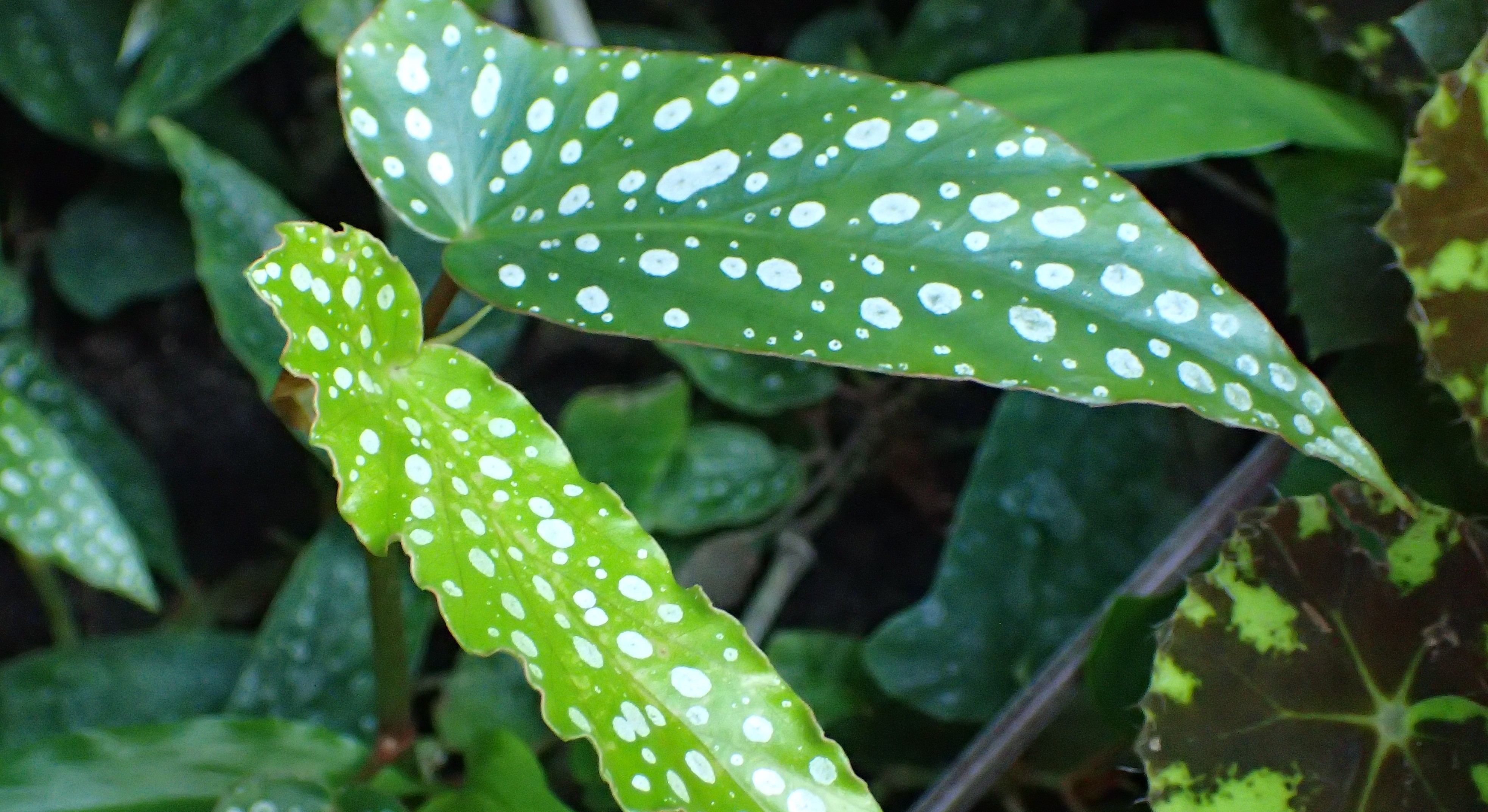
The search for innovation is a basic mechanism for the industry to stay alive and above the trend, capturing more market share. Small growers have also jumped into this race for the exotic: many of the Etsy boutiques that have emerged in the last years are specialized on rare finds such as the Colocasia esculenta Mojito, the Geogenanthus ciliatus, Polka Dot Begonias, the Calathea White Fusion or the Nanouk Tradescantia.
Small growers have also jumped into this trend of the hottest: many of the Etsy boutiques that have emerged in the last years are specialized on rare finds: Colocasia esculenta 'Mojito,' Geogenanthus ciliatus, Polka Dot Begonias, Calathea White Fusion, Polka Dot Begonias or the Nanouk Tradescantia.
Some of these are truly visually rare, while others seem more of a marketing and photo-editing strategy, like the Baltic Blue Pothos: in order to perceive its blueish cast, one has to be quite imaginative.
In some cases, growers modify plants to temporarily provide them with exotic-looking features, that eventually fade with time. A common example is that of blue orchids,[8] which are commonly seen at big box stores. These orchids are not naturally blue; they are dyed blue, and the effect only lasts one blooming season. As the orchid grows new flowers, the consumer is left with a white common orchid.
And in the end, the success of these trends will depend on the consumer: "Our world is dependent on what consumers want. We can try and push product through the market as much as we want, but if it's not demanded, it will not sell," said Dr. Knuth.
"There is a lot of really interesting, cool sciency things going on that may not be the most practical or meaninful to the consumer, especially if it's not going to be long-term sustainable," explained Dr. Alicia Rihn, a researcher in horticultural marketing at the University of Tennessee.
INTERACTIVE
Colonial beginnings
The quest for exoticism has always been a trademark of ornamental crops, from the first traces of plant hunting in Egypt in the XV century BC, to the booming of the modern industry in the colonial era when plants coming from Africa, Asia and the Americas lured the colonial impulse of European aristocrats and scientists. A history between imperialism, globalization and economic extraction that lies at the beginning of the current industry of ornamentals.
START
<>
Uses of potted plants have been documented since at least the ancient Egyptian and Sumerian civilizations,[9] with the first recorded expedition for obtaining living plants happening during the rule of Queen Hatshepsut around the year 1500 b.C. to collect trees of incense and myrrh.[10]
Potted and ornamental crops were also present in ancient Greece and Rome,[11] probably influenced by their encounters with Eastern civilizations. In Mesoamerica, Aztecs were known to cultivate ornamental and medicinal gardens.[12]
Image credits: Relief from the Mortuary Temple of Egyptian Queen Hatshepsut in Deir el-Bahari (Egypt): incense trees transportation, by Ismoon, licensed under CC BY-SA 4.0)
<>
However, the best documented history of houseplants in the West starts with the colonial expeditions of European nations during the so called pre-modern era. Powerful monarchs, merchants and botanical gardens coordinated expeditions to different parts of Africa, Asia, [13]and the Americas. It was a scientific mission as well as a colonial project, where European powers benefitted from established slave-trade routes, forced labor in the colonies and exploitation of natural and cultural resources.
<>
Institutions behind these trips included the Dutch West and East Indies Company with the Hortus Botanicus in Leiden (the Netherlands), the British Royal Gardens in Kew or Edinburgh, the Spanish Crown, the French monarchy or the Austrian monarchy with the Royal Gardens at Schonnbrunn palace.[14]
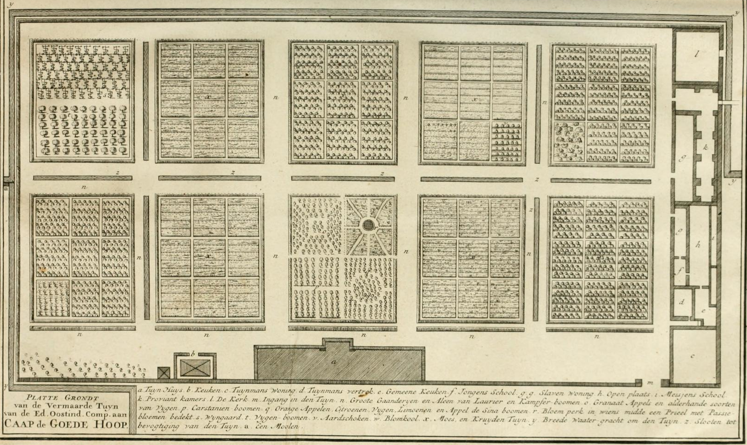
Many of them also established a network of botanical stations[15] in their colonies, such as the Cape Dutch Gardens in South Africa, the British Botanical Gardens of Calcutta or the Viceregal Botanical
Garden of New Spain in Mexico City. These spaces benefitted from forced labor and involved expropriation of the indigenous lands.
Image credits (top to bottom): The Botanical Gardens of Calcutta ca. 1850, developed by the British Empire, (CC0). Map of the Dutch Company Gardens in Cape Town, 1727 (CC0).
<>
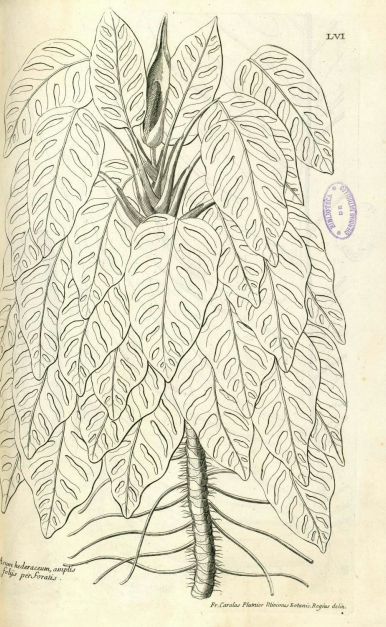
The expeditions were mostly led by male explorers, usually botanists, scientists and/or religious missionaries, who would bring back shiploads of new species in the form of seeds, dry or live specimens, as well as write long treaties describing and naming the species they would encounter.
Houseplant species and genera like Peperomia, Philodendron, Calanchoe, Sansevieria (Snake Plant) or the Golden Pothos were first described in some of the treaties you can see to the right.
Image credits (top to bottom, right to left): Cover from 'Description Des Plantes D'Amerique', by Charles Plumier (CC0); inner illustration from the same book; cover from 'Flora Peruviana et Chilensis,' by Hipolito Ruiz and Jose Pavon (CC0); cover from 'Historia Naturalis Brasiliae,' by Georg Marcgraf (CC0).
<>
As these expeditions were taking place, the growth of exotic plants indoors had started to take off among European aristocrats and scientists in the XVII and XVIII centuries. The Somerset House Conference, a painting from 1604 (see background), is an early depiction of a houseplant as indoor decoration in Europe.
<>
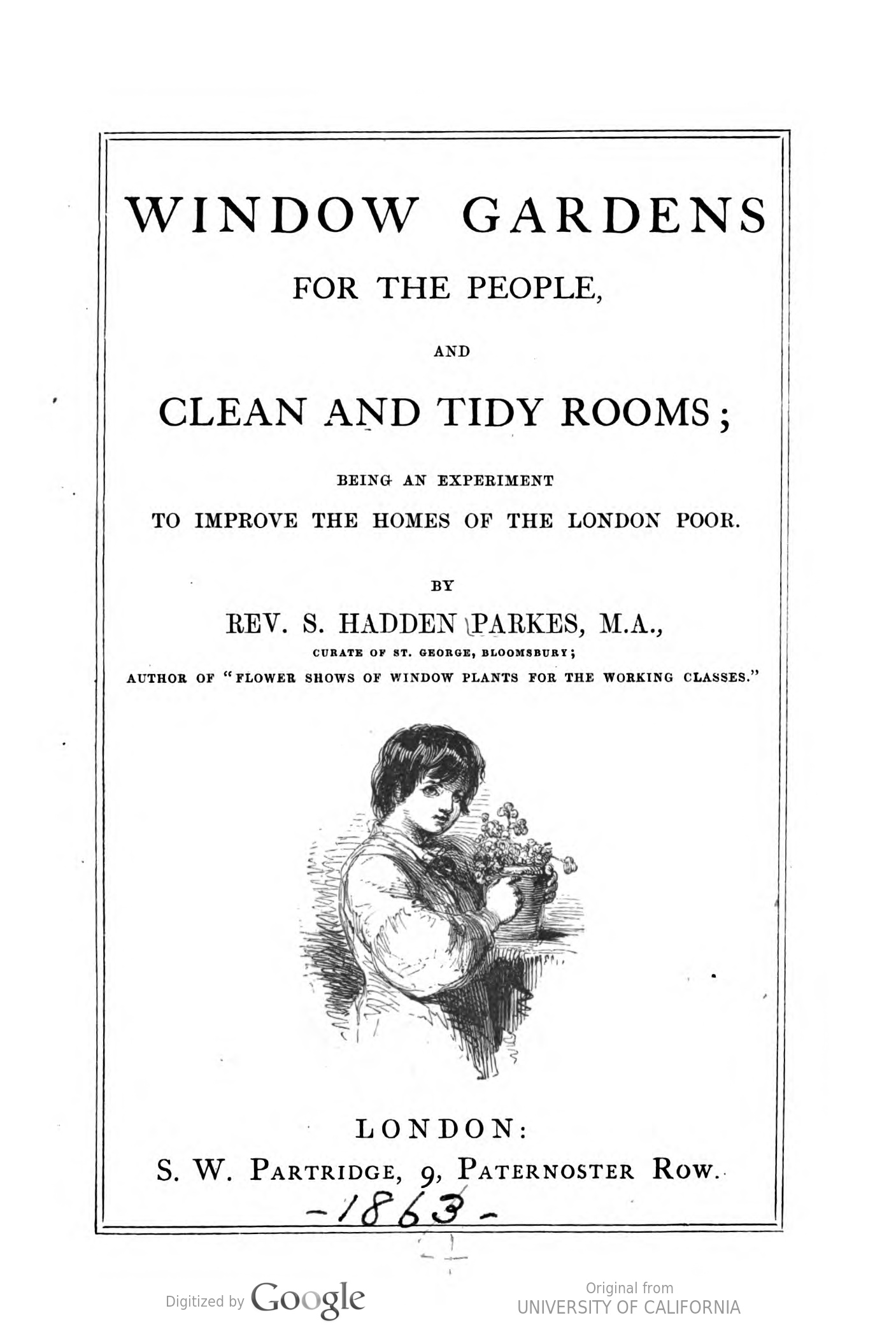
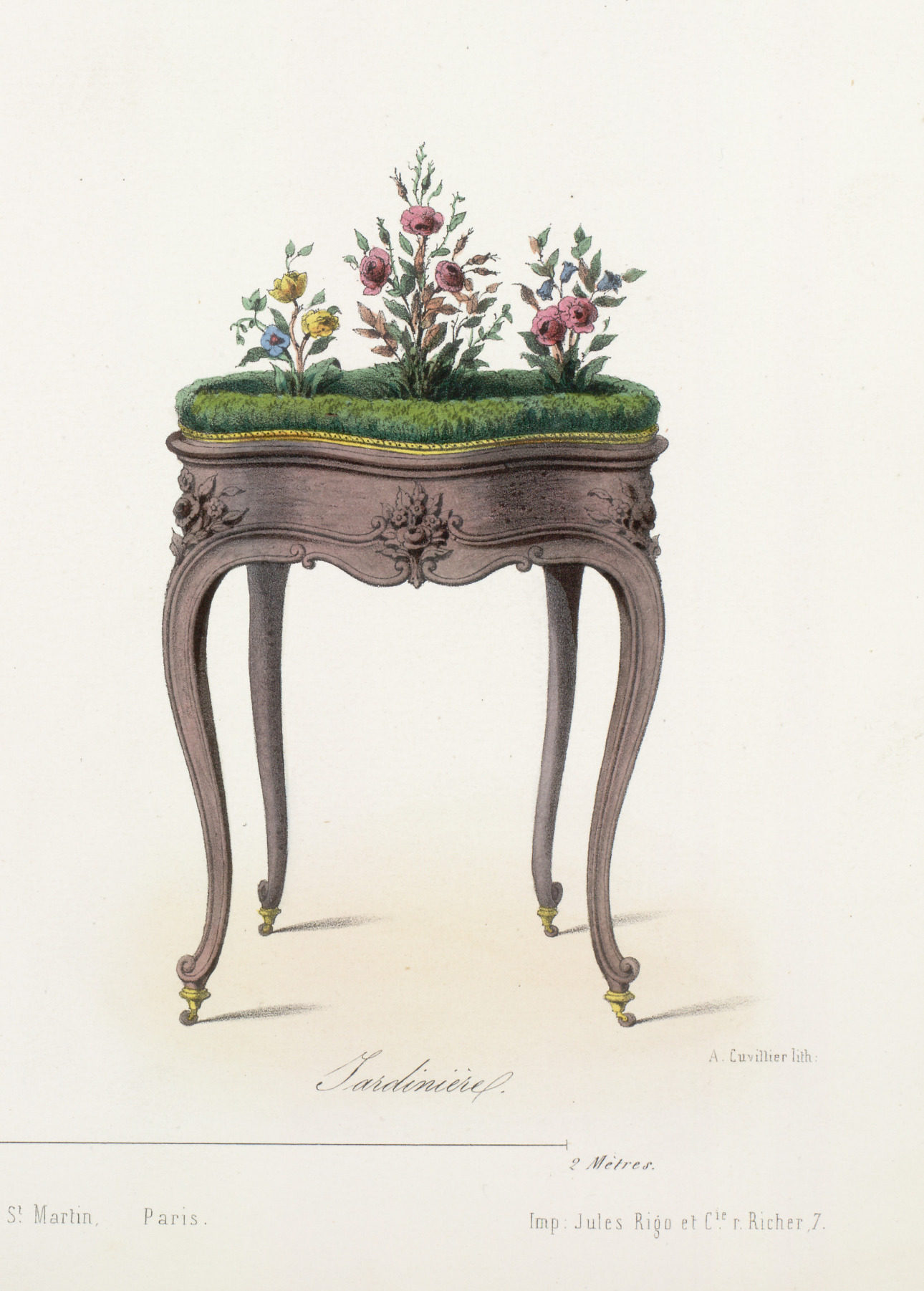
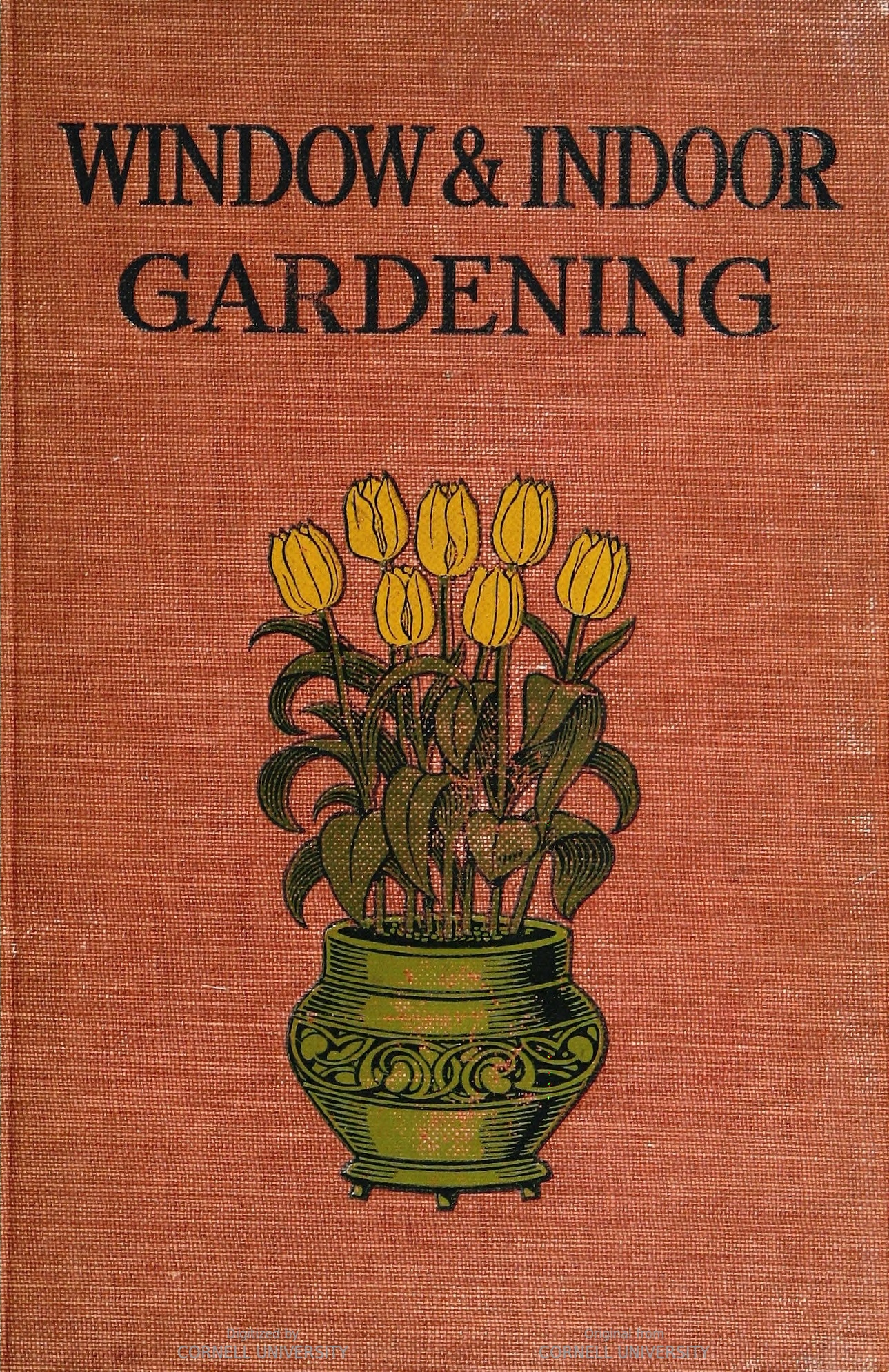
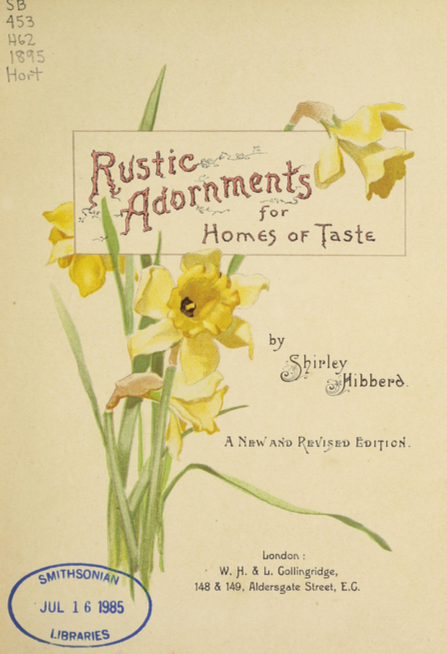
In the second half of the XIX century, indoor and window gardening had reached all strates of society. Many books and magazines on the issue were being published to advice the novel domestic gardener, with several authors becoming celebrities and gaining popularity.[16]
Image credits (top to bottom, right to left): Cover of 'Window Gardens for the People' (1864), by Samuel H. Parkes (CC0); illustration from the French magazine
'Le Garde meuble,' (1839) by Desiré Guilmard (CC0); cover from 'Window and Indoor Gardening,' (1936) by T.W. Sanders (CC0); cover from 'Rustic Adornments for Homes of Taste,' (1895) by Shirley Hibberd (CC0).
<>
Specific plants generated specific fads. In the second half of the XIX century, the society of Victorian England became obsessed with ferns, both native and foreign species.[17] These phenomenon, known as 'fernmania', 'fern-mania' or 'pteridomania', went beyond live plants, but motifs around ferns also became ubiquitous in pottery, glass, textiles or prints.
Image credits: Illustrations from 'The handbook of British ferns,' by Thomas Moore (CC0).
<>
The start of the 20th century saw a shift in attitudes towards houseplants in Great Britain and elsewhere. After the First World War, the abundance that characterized Victorian homes abundance was increasingly seen as bad taste,[18]. As modernism became more popular, cacti and succulents entered the houseplant market (although they had been brought to Europe centuries before).[19]
Image credits: Portrait of a Woman (with Cactus). Frederick Carl Frieseke, 1930. CC0.
<>
The back-to-nature movement in the West during the 1970s brought an increasing desire to greenify people's homes.[20] This interest met with an increasing agricultural production from the advances of the Green Revolution and the availability and use of plastic pots in the industry, which were cheaper, lighter and less liable to damage.[21] In the United States, the wholesale value of foliage plants in the United States rose from 295 million in 1969 to 585 in 2001.[22]
Profiling the new #plantparent
A key question in the current plant frenzy is: who is buying all these plants?
"Traditionally, the core consumer of plants and ornamental gardening in general were women over the age of 66, from high-income households," explains Dr. Rihn from the University of Kentucky.
This trend had long worried the industry, according to Dr. McGinnis, since it didn't seem there was going to be a replacement from younger generations. But in recent years, the demographic for the gardening industry has become younger.
The rejuvenation of the sector might be related to the rise in houseplant popularity, an area that has traditionally been dominated by millennial consumers, explained Dr. Knuth. "Houseplants are conducive to an apartment lifestyle, since they are cheap and easy to take care of."
She points that the interest in houseplants has also expanded, in this case, to baby boomers and generation X individuals, as well as suburban and rural households.
In sum, the consumer pool expanded horizontally and vertically, also witnessing an increase of diversity in race, income and household type. according to the most recent National Gardening Survey, in 2020 there was a "disproportionate growth of gardening activity among traditionally less well represented groups."
I am a peperomia!
As for plant growers and sellers, there was also a general growth, benefitting both big and small companies. The rise of online sales benefitted those big players who had the infrastructure, but it also opened an opportunity for small plant growers who realized they could start a business from their own homes and promote it on platforms like Etsy or plant-only marketplaces like PlantsPltz, which was born during the pandemic.
"Young people want to support local businesses. There is a backlash against big corporations and an interest in sustainability," explained Dr. McGinnis. "Here, in Fargo (North Dakota), it's been amazing to see these small stores thrive."
But despite the blooming of smaller, localized initiatives, it is a reality that big box retailers are still predominant in the market. And, as the industry grows, its environmental footprint might become a concern.
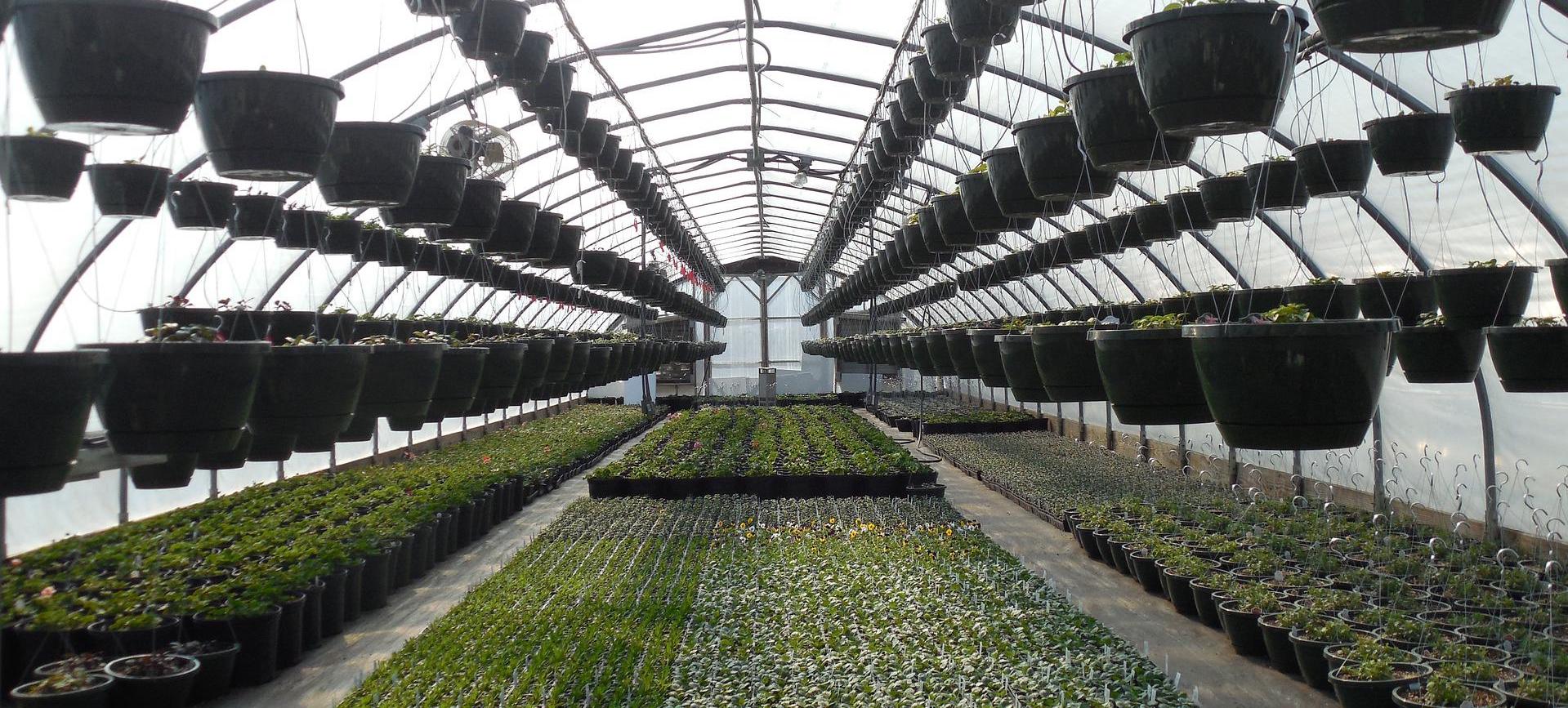
Greenhouse for ornamentals. (Source:Wikimedia Commons)
The environmental impact
Most houseplants are native to tropical or warm latitudes. In order to be used as decorative elements elsewhere, they can either be grown in warm regions and imported elsewhere, or they can regionally be grown in glass-heated infrastructures.
Furthermore, the hunt for exotic varieties has brought a paradox where some of the plants that populate our stores and social media channels are actually very rare in their native habitats. Examples are the Chinese Money Plant (Pilea Peperomioides) or the Ponytail Palm (Beaucarnea Recurvata).
I am a Pilea Peperomioides!
This last one is actually classified by the Mexican government as threatened and at risk of extinction in its native habitat.[22] The species is listed in the Appendix II of the Convention on International Trade in Endangered Species, which means that its international trade is regulated.[23]
While tending houseplants might provide a sense of connection to nature, the evolution of the industry might be putting them in danger and increasing pressure on the environment.
Is there such a thing as native houseplants?
There is currently a big push for natives in the landscape industry in the United States. However, in the case of houseplants, it becomes more complicated. While indoor temperatures usually resemble the tropical and subtropical climates where many houseplants come from, they are usually too hot for native plants in temperate zones.
There are some exceptions, though. The English ivy is a rather common houseplant native to temperate forests in Europe which grows well in dark interiors.
In the U.S., an easy houseplant that’s native to the southern part of the country is the Tilandsia Recurvata, an air plant species that is frequently grown in terrariums or aereums. Venus Flytraps are also native to the U.S. and can be grown indoors, said Dr. Knuth, although they are delicate. Also very fragile are some species of native ferns, like the Southern Wood Fern which might survive in interiors, according to the catalog of plant grower Monrovia.
The tillandsia recurvata and the venus fly trap are two species that grow natively in the U.S. and are also grown as houseplants.
The toll of a growing industry
In order to fully understand a product’s environmental impact it’s usually important to assess its carbon footprint. A research group at the University of Kentucky has put together a series of papers on the carbon footprint of a series of landscaping plants.
according to them, a 72-count propagation tray of foliage plants grown in a variety of greenhouse systems in the southern U.S. was estimated to have a CF of 2.28 to 4.22 kg CO2e, with electricity and heating costs representing between 87% and 90% of the carbon footprint even in warmer climates.
For a greenhouse-grown poinsettia in a 6-inch container, the footprint was of 0.47 kg CO2e, with the substrate, container, and fertilization contributing 30 percent of the footprint.
Even if these numbers are not so striking as other industries (a dozen of eggs, for example, has a 2.7 kg CO2 environmental footprint), there is always margin to improve. The 2021 Greenhouse State of the Industry Report shows increasing interest from the industry in sustainable production methods, such as the reduction of water and energy consumption, recycling, using LPM biocontrols and composting.
“There are always conversations about sustainability because, from an economic standpoint, the less inputs you use, the practice tends to be more environmentally friendly and cost less to produce,” explained Dr. Rihn. She points at practices like using compostable containers that can be planted and be degraded into fertilizer.
From the consumer standpoint, some eco-friendly practices might include buying from sellers that source their products locally and promote organic growing practices, looking for peat-free varieties, composting, avoiding seasonal products, joining a local plant-share collective or learning how to propagate and grow plants from old stems.
Of course, this restrained approach might clash with the ambitions of many plant parents, constrained by their lack of time and lured by the fast fashion of houseplants.
In the end, caring for plants becomes one of many small challenges for coherence in an era of climate crisis.